Motion Analysis for Clinical Classification of Dystonia Patients using Deep Learning
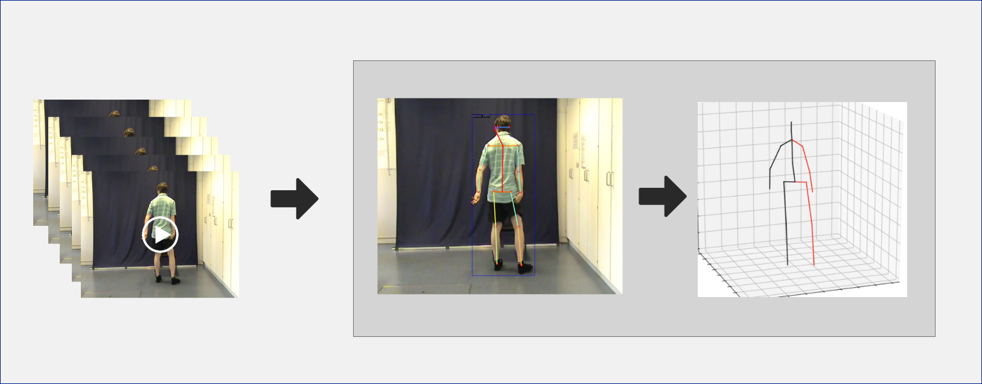
This project uses deep learning to analyze gait and pose from video to objectively classify dystonia types and predict severity, providing clinicians with an unbiased diagnostic tool.
Dystonia, a neurodegenerative disorder causing involuntary muscle contractions, is challenging to diagnose accurately due to its varied manifestations and subjective clinical assessments. Traditional diagnostic methods are prone to subjective bias, highlighting the critical need for an unbiased and objective diagnostic approach.
Our goal is to pioneer a deep learning-based algorithm capable of classifying diverse dystonia types and predicting their severity through single-camera videos. We aim to introduce an objective diagnostic tool applicable within clinical settings by exploring deep learning-based computer vision techniques to extract clinically relevant features for unbiased classification and severity prediction, involving gait analysis, automatic pose detection, motion estimation, and advanced algorithms.
The project created a deep learning-based system capable of extracting clinically relevant features from video, enabling unbiased dystonia assessment and supporting more accurate clinical decision-making.